1. The 6-Hectare Floating Halo Roof
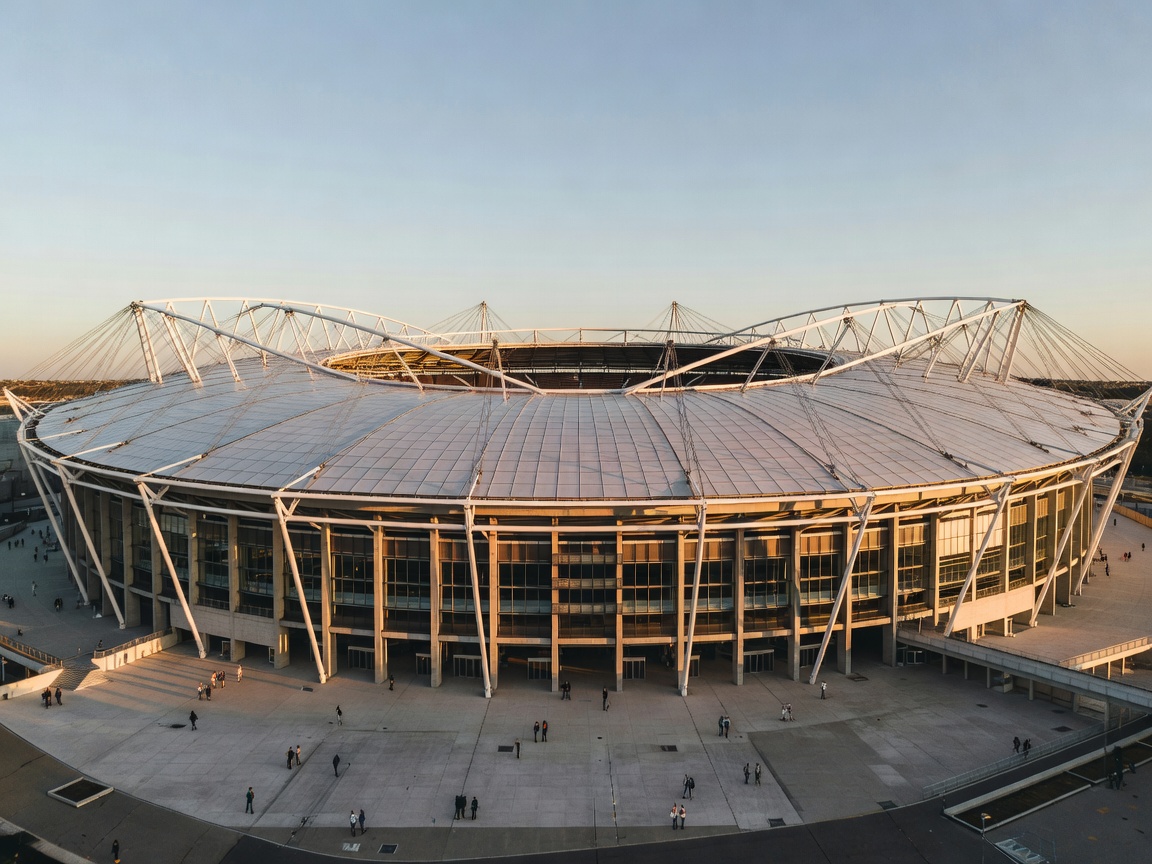
The Stade de France is globally recognizable by its suspended elliptical disk roof that appears to float weightlessly 46 meters above the Saint-Denis plain. The structure weighs approximately 13,000 tonnes and is held aloft by 18 slender steel pylons, filtering natural sunlight through tinted central glazing while shielding spectators from inclement weather.
2. Motorized Retractable Lower Tier Engineering
One of the most complex mechanical engineering feats in modern stadia, the lower tier of 25,000 seats is motorized and can retract 15 meters backward into the stadium structure within 80 hours. This reveals an IAAF-certified Olympic running track for athletics while transforming back into a steep, pitch-side football configuration for Coupe de France and UEFA Champions League finals.
3. The Center of French Sporting History
The stadium remains synonymous with France’s 3–0 triumph in the 1998 World Cup final against Brazil and the 2024 Paris Olympic and Paralympic Games. Its expansive concourses, perimeter promenades, and monumental ramps facilitate smooth ingress and egress for over 80,000 spectators.
4. Transport Connections (RER B & RER D)
Located 2 kilometers north of Paris proper in Saint-Denis, the stadium is accessed via RER B (La Plaine - Stade de France) and RER D (Stade de France - Saint-Denis), providing direct 10-minute connections from Gare du Nord and Châtelet-Les Halles.